Speeding remains the biggest contributing factor to NSW road trauma, accounting for around 42% of fatalities and 25% of serious injuries each year. This equates to almost 130 lives lost and around 1,050 people seriously injured each year.
The proportion of fatalities in crashes where speeding was involved increased from 2019 (136) to 2023 (151) with the lowest point in 2021 (107).
- Speeding is the single biggest contributor of fatalities on NSW roads.
- At high speed, even a few kilometres per hour increases the time needed to respond to a hazard and increases the impact forces in a crash. This can mean the difference between life and death.
- When the unexpected happens on the road - the speed that you're travelling at matters. 'Just a bit over’ can be the difference between being able to stop in time or not at all.
- The faster you’re going:
- The impact of a crash is more severe.
- The likelihood of serious injury or death increases.
- The stopping distance required increases.
- More time is needed to react and avoid a crash.
- Most speed-related crashes happen in country areas.
- Between 2020 and 2024, in crashes where speeding was involved, just under two-thirds of fatalities and serious injuries occurred in country areas.
- Regional NSW is home to a third of the population but is where two-thirds of all road deaths happen.
This toolkit can help support your online and in-person communications and engagement. Some assets require sign up to certain accounts to download. Learn how to register for a Creative Assets Library (CAL) account at the end of this page.
You can view toolkits covering other road safety topics on the communications toolkits page. If you're a registered Hub member log in to access the full list of toolkits available.
Background
From 1 May 2025 until 30 June 2026, a trial was conducted in two separate locations on limited stretches of highway in regional NSW to assess whether these measures reduce speeding at these locations, improving safety and preventing injuries and fatalities. The trial areas are:
- Pacific Highway between Kew and Lake Innes (Port Macquarie) – 15 km between cameras
- Hume Highway between Coolac and Gundagai – 16 km between cameras.
The trial began on 1 May with a 2-month warning period that ended on 30 June 2025.
From 1 July 2025, all speeding offences are being enforced by the average speed cameras.
Initial results show the trial has resulted in a 76% improvement in light vehicle compliance when compared with pre-trial data.
As a result, enforcement of light vehicles will continue at both trial sites.
Average speed camera penalty rates for light vehicles are the same as the penalty rates for other speeding offences by light vehicles. This means that penalties for average speed offences committed in the trial will align with penalties for existing light vehicle speeding offences.
You can find more information on average speed cameras and the trial on the Centre for Road Safety website.
How Average Speed Cameras work
Article copy
Speeding remains the biggest contributing factor to NSW road trauma, accounting for around 42% of fatalities and 25% of serious injuries each year. This equates to almost 130 lives lost and around 1,050 people seriously injured each year.
In regional NSW in particular speeding is a risk; it is the single biggest cause of death on country roads in NSW.
In 2024, 2 in 3 deaths on NSW roads occurred in regional or rural areas, despite regional NSW accounting for only one third of the population.
The faster you’re going:
- The impact of a crash is more severe.
- The likelihood of serious injury or death increases.
- The stopping distance required increases.
- More time is needed to react and avoid a crash.
This communication toolkit comprises a number of resources to help you promote messages around safe speeds and the risks of speeding within your community.
They can be used as part of events or distributed to relevant venues and facilities.
Please use and share the resources and share examples of your activity within the Hub.
General
 |
|
 |
|
Casual speeding - Facebook cover image
Social media copy:
N/A. Add this cover image to your Facebook account
Download on CAL - ID 117081
|
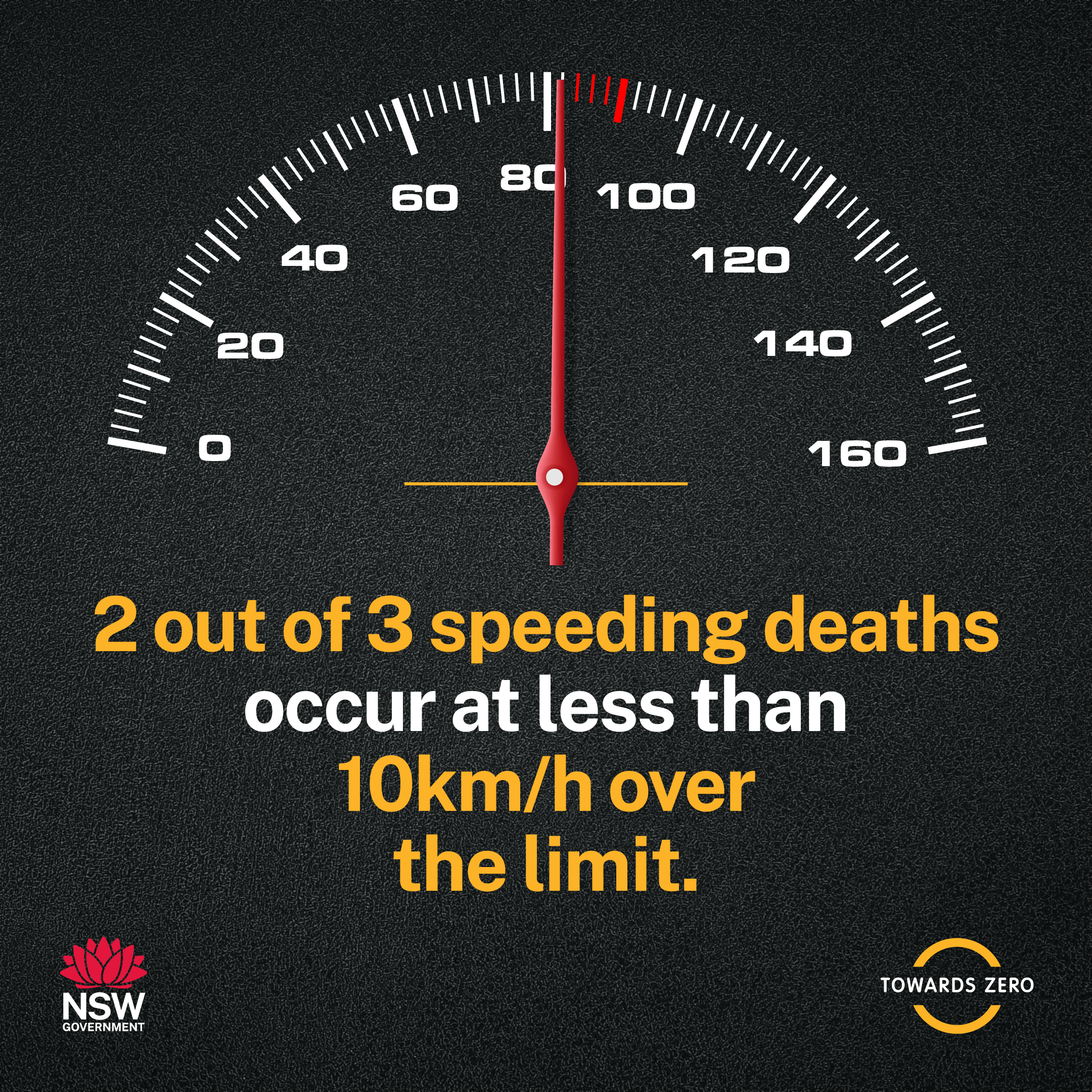
Casual speeding statistic 1x1
Social media copy:
Small increases can have big consequences. ‘Low level speeding’ is the biggest cause of deaths and serious injuries on NSW roads. When driving or riding, stay within the speed limit to help keep everyone safe.
Note: You can customise this based on your area e.g. "When driving or riding around Port Macquarie, stay within the speed limit to help keep everyone safe".
Download
|
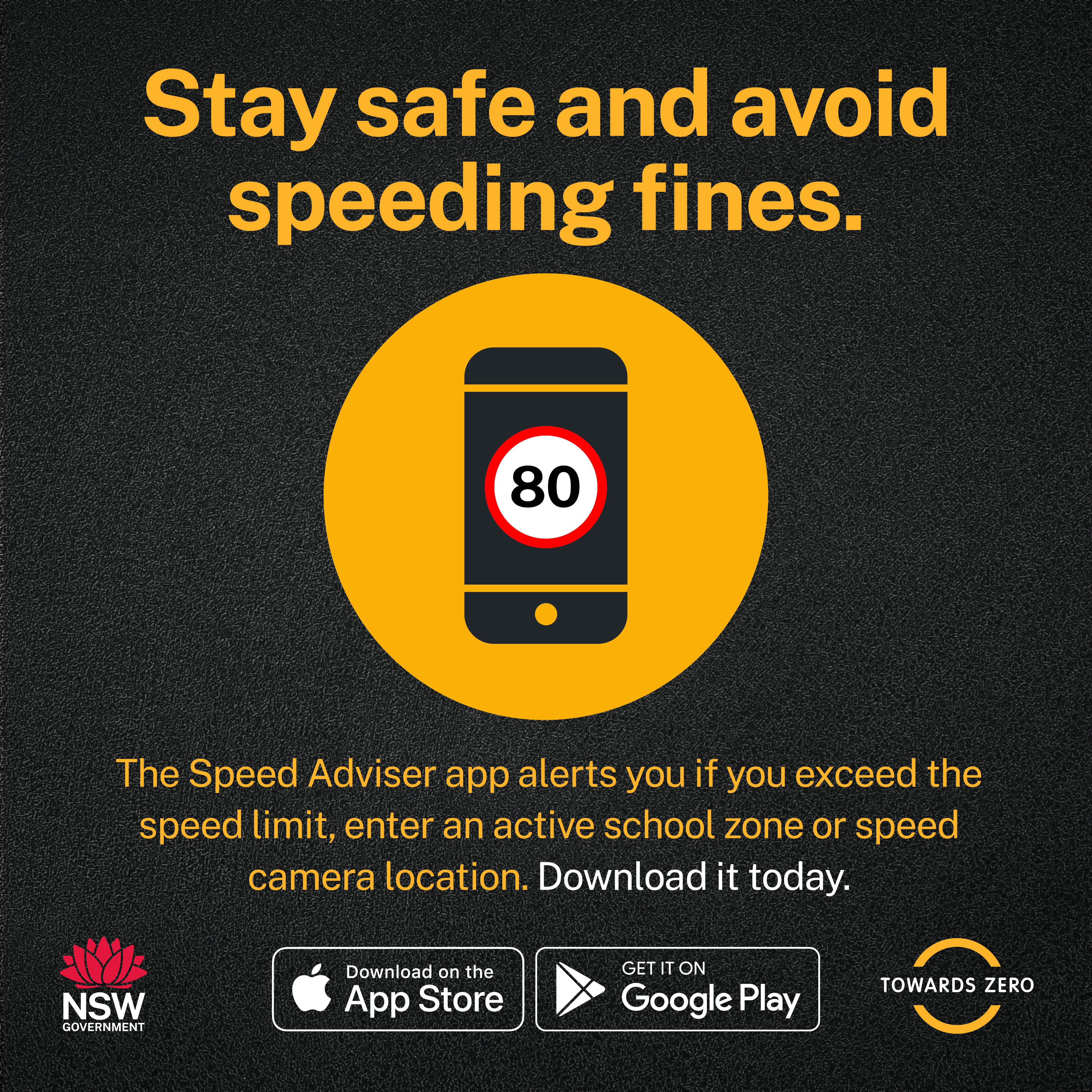
Speed adviser 1x1
Social media copy:
The Speed Adviser App is your ultimate ‘backseat driver’ providing audible and visual warnings if you exceed the speed limit, enter a mobile speed camera zone, when a school zone is active, on approach to a public rail level crossing and more.
Download
|

|
|
|
|
Quiz
Social media copy:
Test your road safety knowledge on the topic of speeding: https://quiz.towardszero.nsw.gov.au/speedingquiz
|
|
|
Average speed camera light vehicle trial - July 1 enforcement
 |
 |
|
|
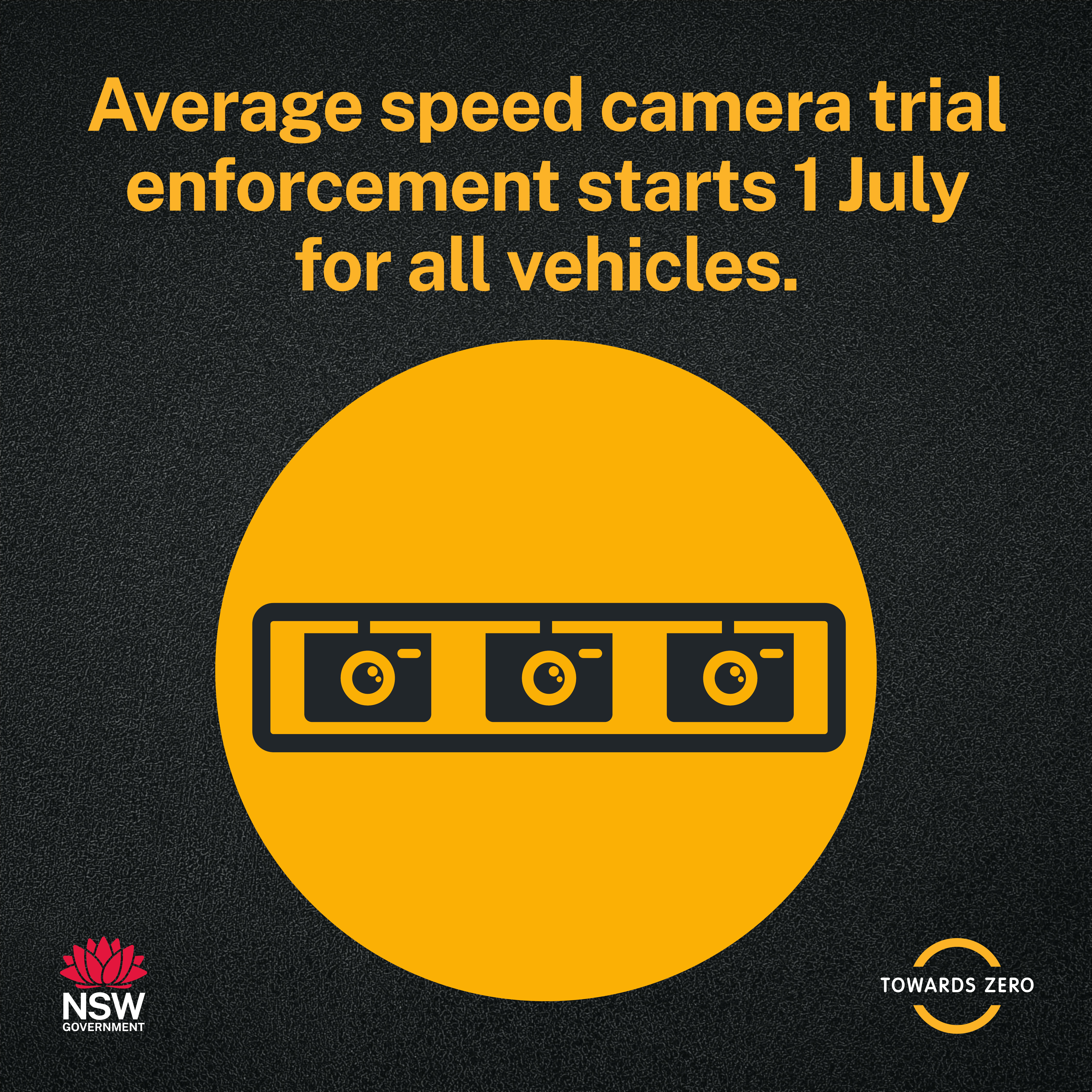
Average speed camera trial enforcement starts 1 July for all vehicles 1x1
Social media copy:
A trial using average speed cameras to detect speeding in light vehicles – cars, motorbikes and utes – is underway in NSW. The two trial areas are: Pacific Highway, between Kew and Lake Innes, in Port Macquarie, and Hume Highway, between Coolac and Gundagai. For more info, please visit: www.transport.nsw.gov.au/roadsafety/topics-tips/speeding/enforcement-cameras/average-speed-cameras
Download
|
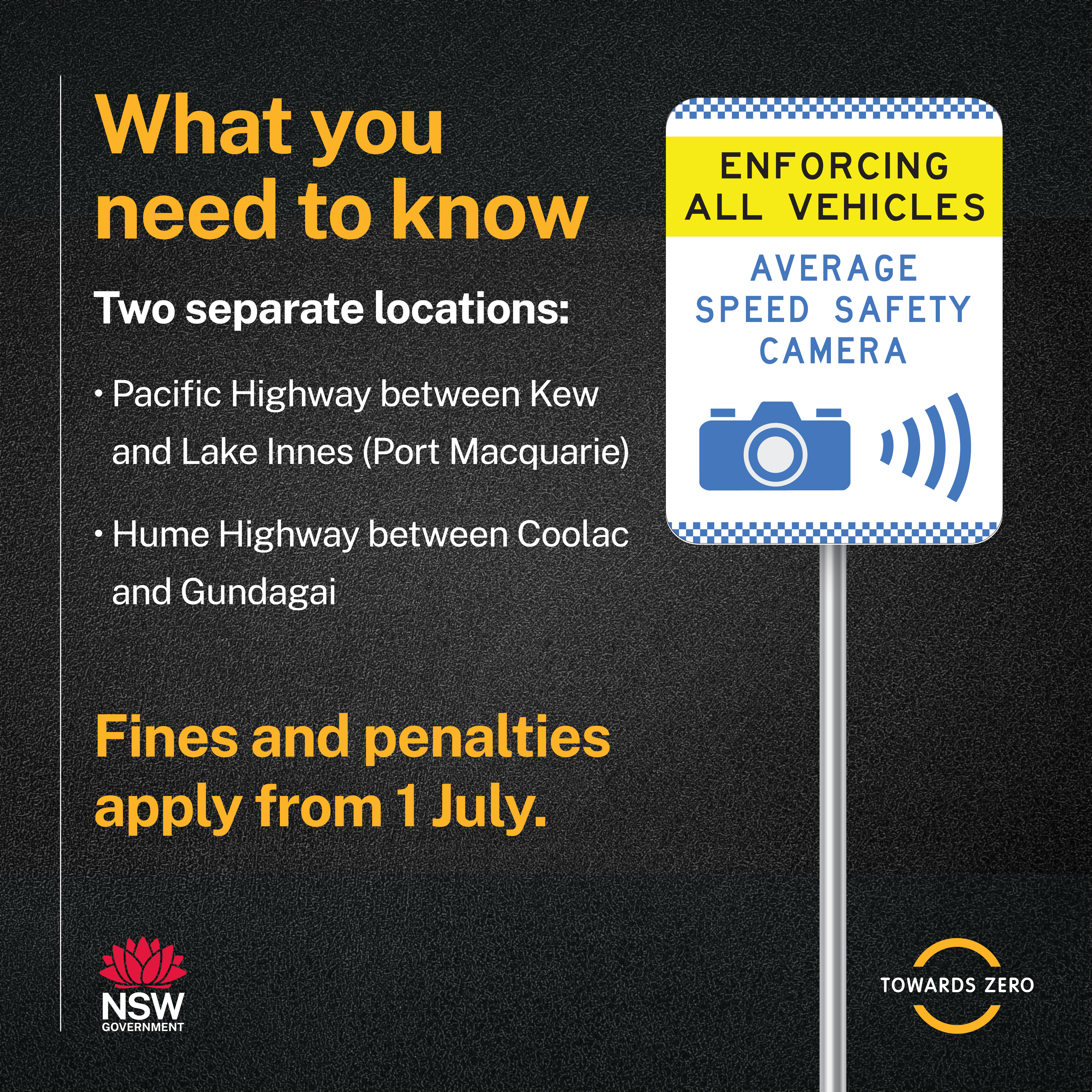
What you need to know 1x1
Social media copy:
A trial using average speed cameras to detect speeding in light vehicles – cars, motorbikes and utes – is underway in NSW. Average speed cameras use two cameras to measure the amount of time it takes a vehicle to travel between two points on a stretch of road. The vehicle’s average speed between the two cameras is then calculated. If the vehicle’s average speed exceeds the speed limit for the length of road, the driver or rider will receive a penalty for speeding.
Average speed camera penalty rates for light vehicles are the same as the penalty rates for other speeding offences by light vehicles.
Download
|
|
Stopping distances
 |
 |
 |
|
Stopping distances – 80-100km/h 1920x1080
Social media copy:
Speeding is the single biggest cause of death on NSW roads. Speeding is not just travelling above the speed limit but also driving too fast for the conditions (such as wet road or a bend in the road). Drive to the conditions and so that you, and others, survive.
Download
|
Stopping distances – 80-100km/h 1x1
Social media copy:
Speeding is the single biggest cause of death on NSW roads. Speeding is not just travelling above the speed limit but also driving too fast for the conditions (such as wet road or a bend in the road). Drive to the conditions and so that you, and others, survive.
Download
|
Stopping distances – 40-70km/h 1920x1080
Social media copy:
When it comes to the distance required to come to a complete stop in your vehicle, your speed matters. Even a small difference in your speed can greatly affect the likelihood of death or serious injury.
Download
|

|

|

|
|
Stopping distances – 40-70km/h 1x1
Social media copy:
When it comes to the distance required to come to a complete stop in your vehicle, your speed matters. Even a small difference in your speed can greatly affect the likelihood of death or serious injury.
Download
|
Stopping distances – 30-60km/h 1x1
Social media copy:
The faster you go, the longer it takes to stop. Even at 40km/h it can take well over 20 metres to stop. Remember this when driving, even at lower speeds, and especially in areas with lots of high pedestrian activity.
Download
|
Stopping distances – 30-60km/h 1920x1080
Social media copy:
The faster you go, the longer it takes to stop. Even at 40km/h it can take well over 20 metres to stop. Remember this when driving, even at lower speeds, and especially in areas with lots of high pedestrian activity.
Download
|
Speed survivability
 |
|
 |
|
Speed survivability – Pedestrian 1920x1080
Social media copy:
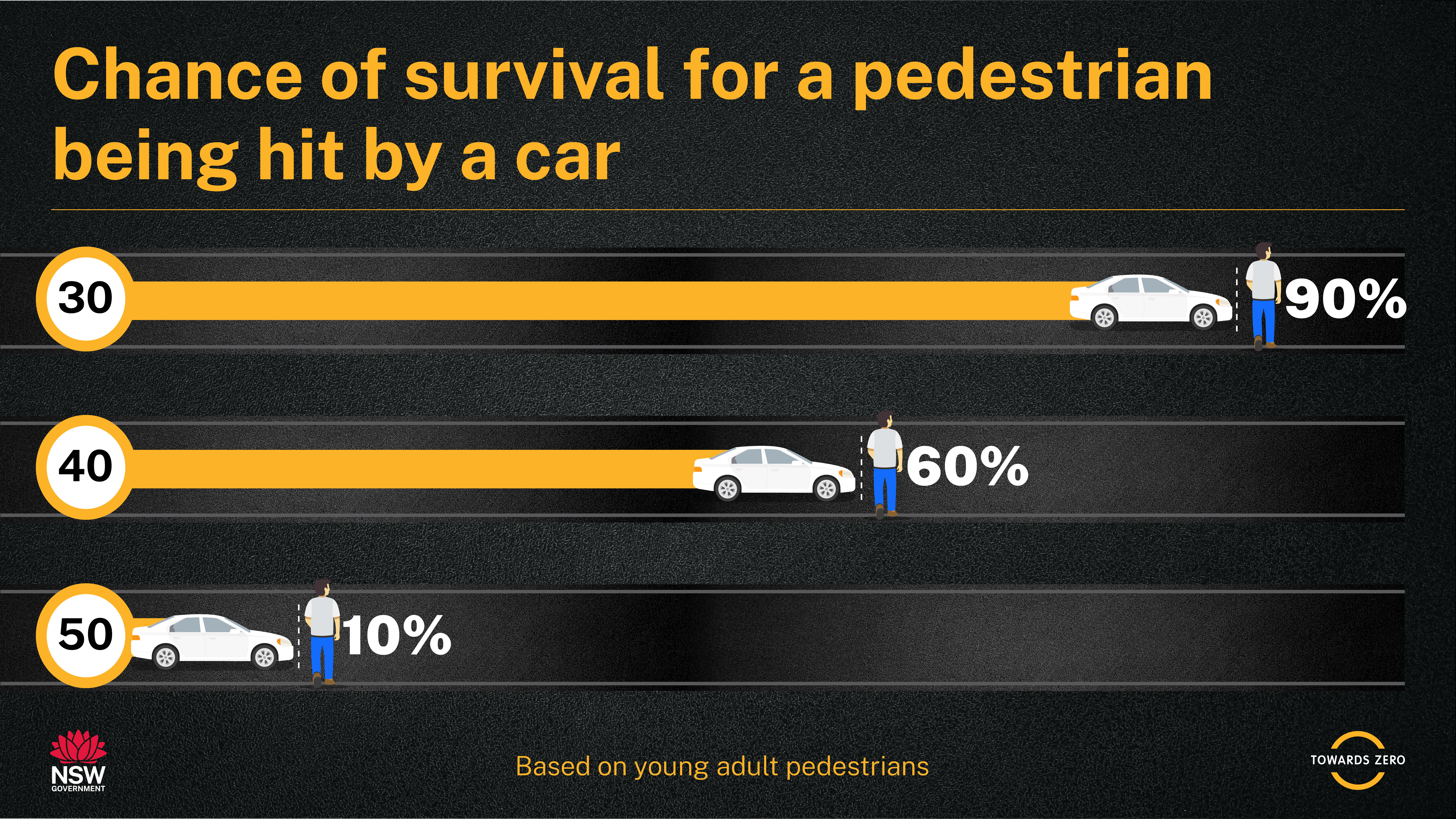
If a pedestrian is hit by a car travelling at 30km/h they have around 90% chance of surviving. If speed is increased to 50km/h that chance of survival goes down to just 10%. Speed kills. Please drive so others survive.
Download |
Speed survivability – Pedestrian 1x1
Social media copy:
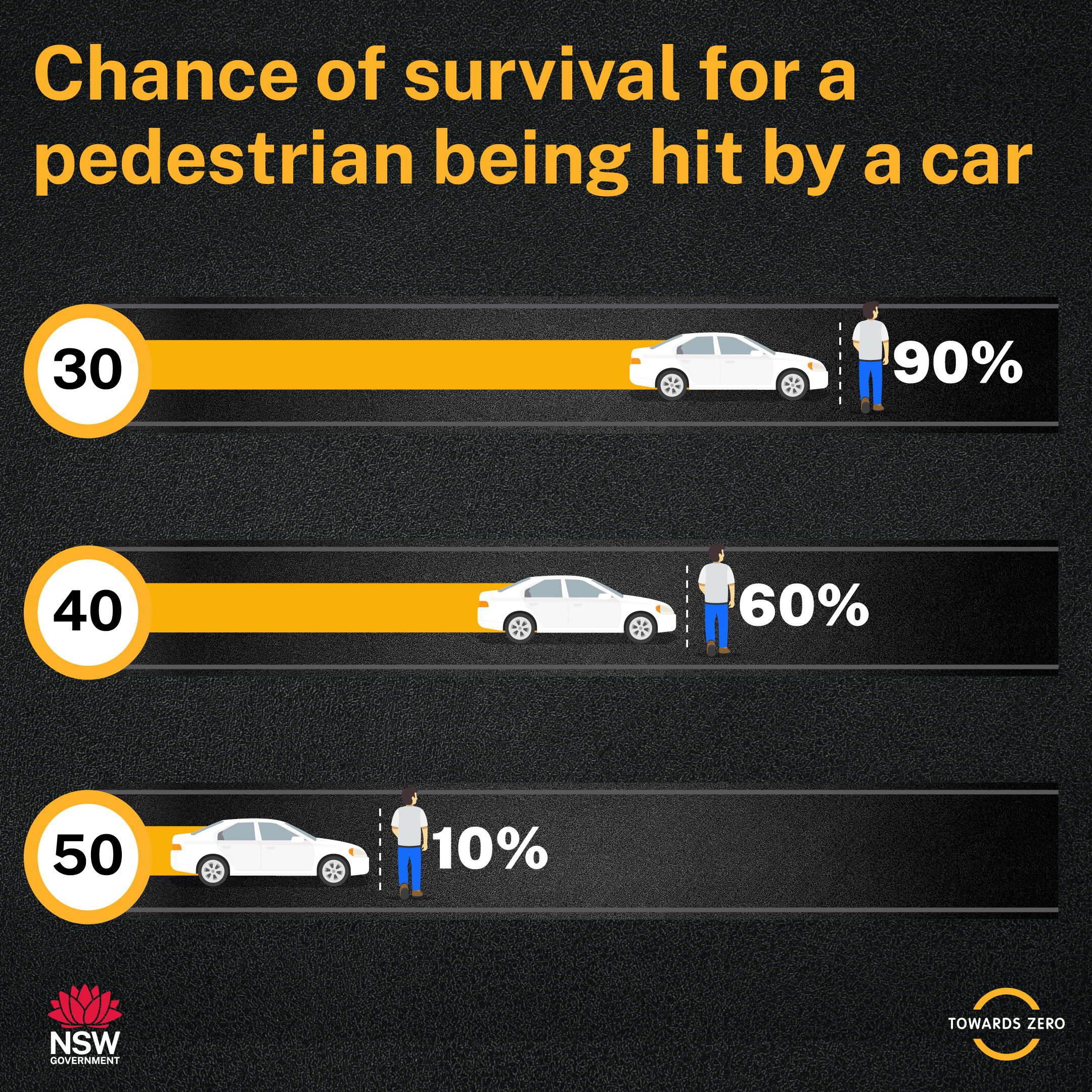
If a pedestrian is hit by a car travelling at 30km/h they have around 90% chance of surviving. If speed is increased to 50km/h that chance of survival goes down to just 10%. Speed kills. Please drive so others survive.
Download
|
Speed survivability – Side on 1920x1080
Social media copy:
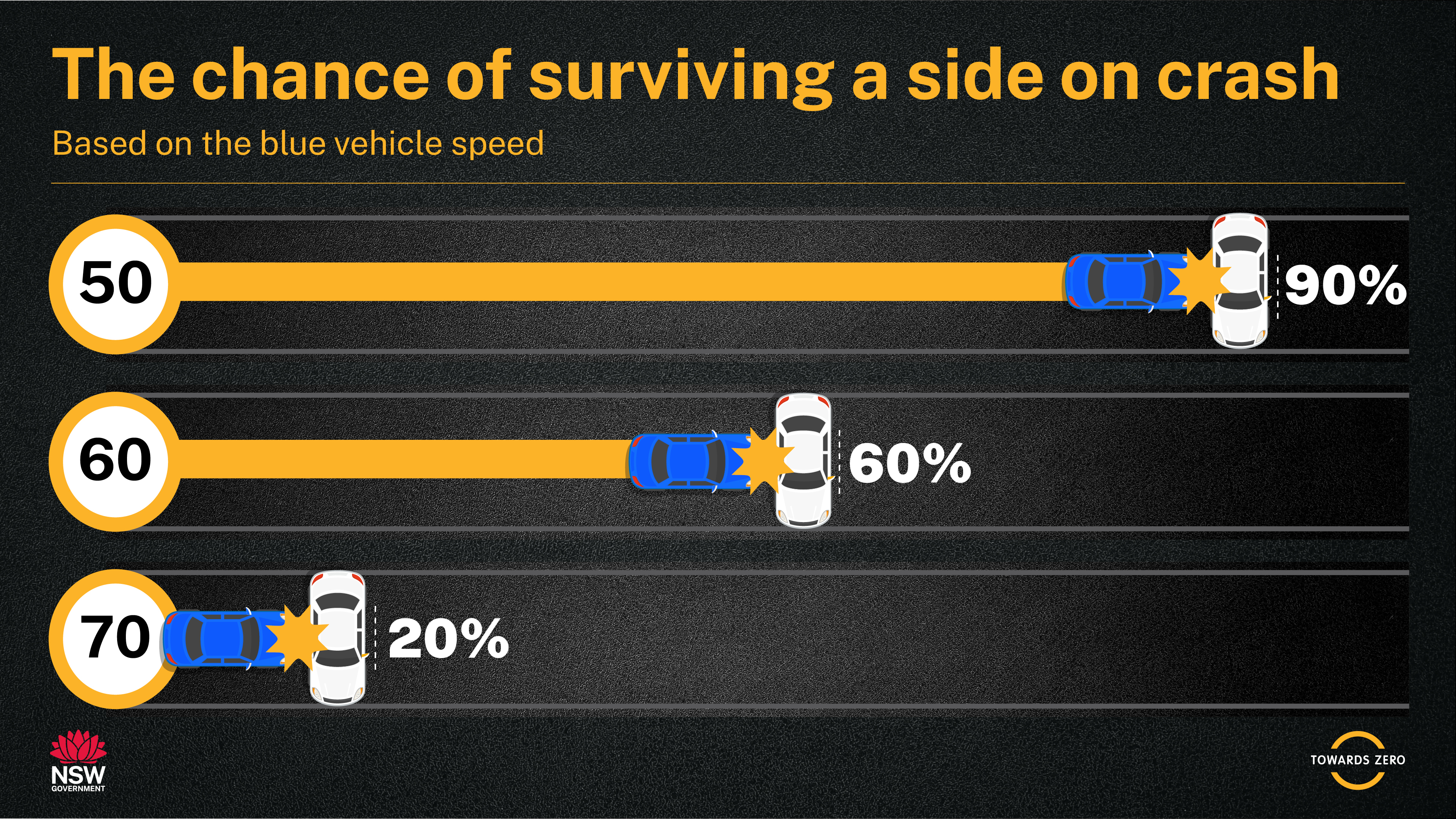
Speeding can increase your chance of a side-on crash and decrease your chance of surviving the crash. When approaching intersections, slow down and follow road signs and signals.
Download
|
 |
 |
 |
|
Speed survivability – Side on 1x1
Social media copy:
Speeding can increase your chance of a side-on crash and decrease your chance of surviving the crash. When approaching intersections, slow down and follow road signs and signals.
Download
|
Speed survivability – Front on 1920x1080
Social media copy:
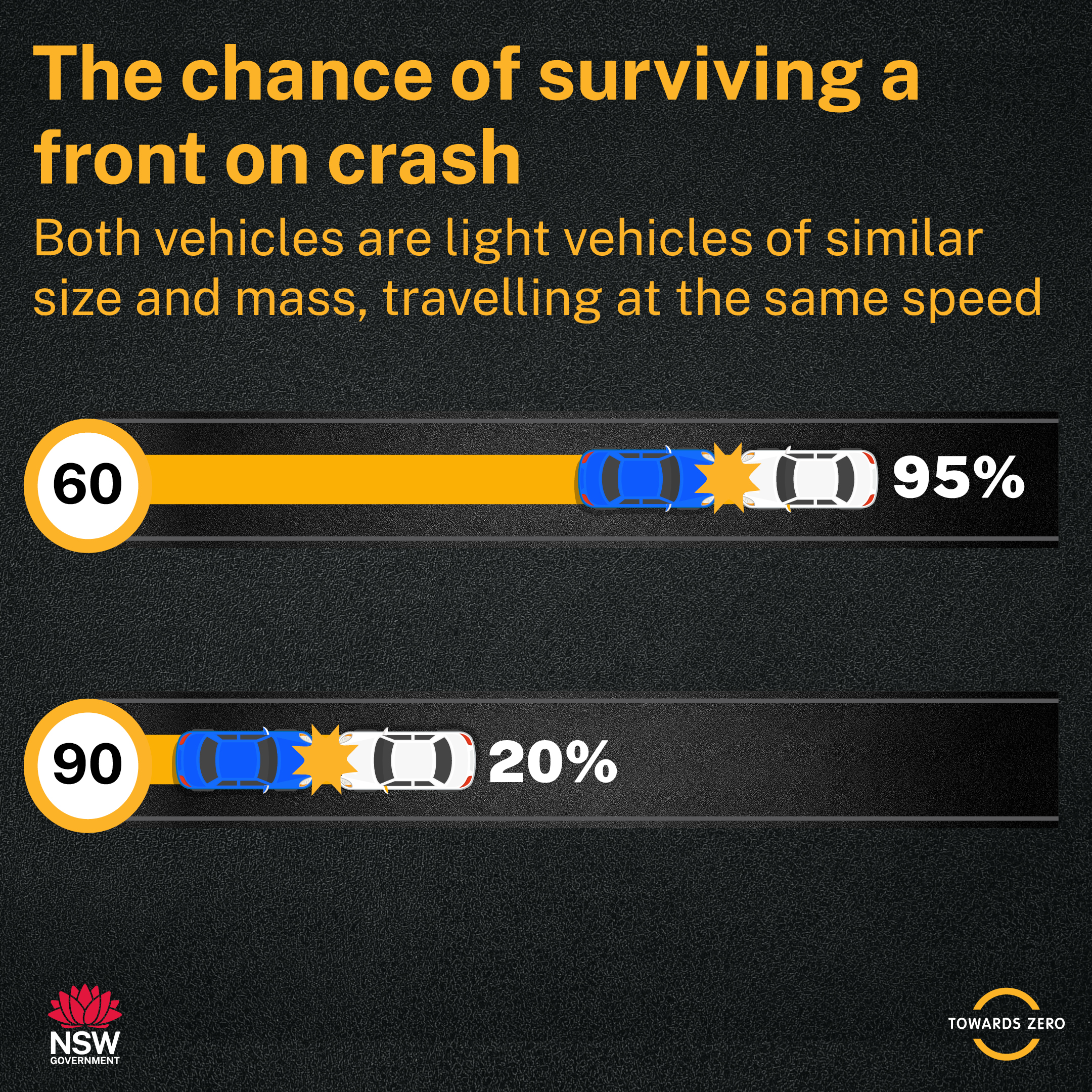
Speeding can increase your chance of having a head-on collision.
Exceeding the speed, or not driving to the conditions, especially on curves, can increase the risk of drifting into other lanes and running into oncoming traffic.
Slow down and stay alert.
Download
|
Speed survivability – Front on 1x1
Social media copy:
Speeding can increase your chance of having a head-on collision.
Exceeding the speed, or not driving to the conditions, especially on curves, can increase the risk of drifting into other lanes and running into oncoming traffic.
Slow down and stay alert.
Download
|
Speeding on country roads
|
|
|
|
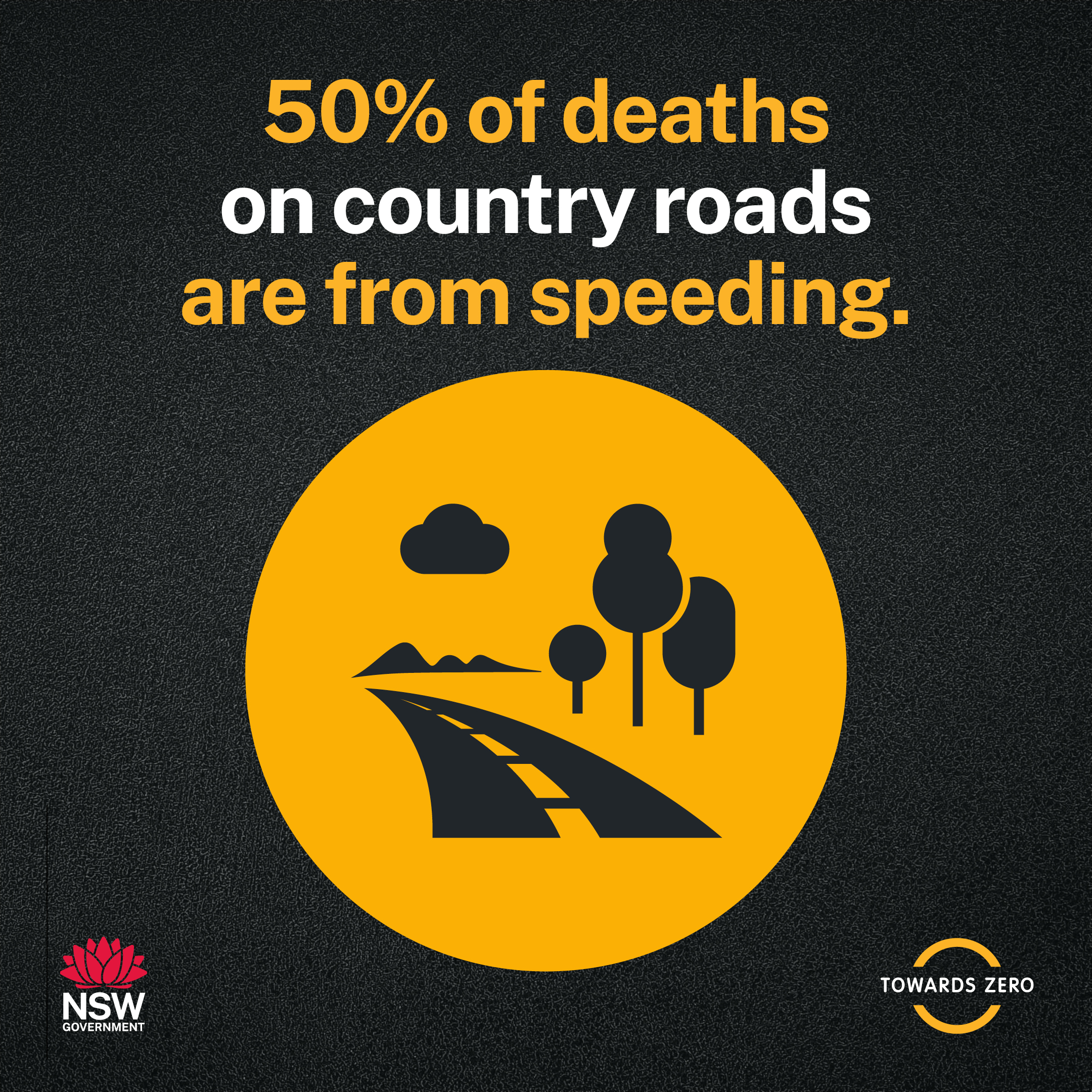
50% of deaths on country roads are from speeding 1x1
Social media copy:
Speeding is the single biggest cause of death on country roads in NSW. Travelling too fast around curves can lead you to lose control of your vehicle, drift into the adjacent lane, and collide with oncoming traffic. Slow down at curves on country roads.
Download
|
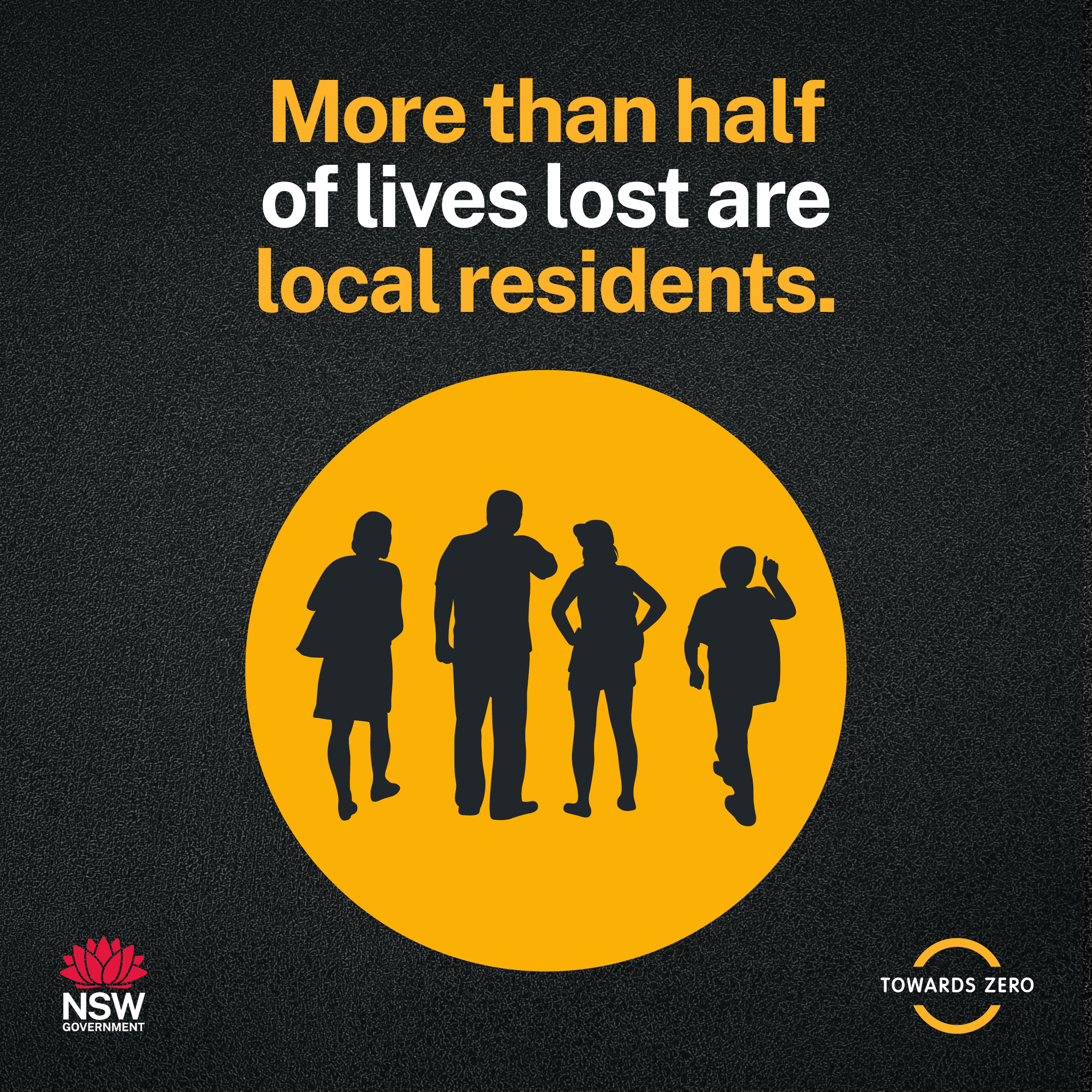
More than half of lives lost are local residents 1x1
Social media copy:
85% of fatal crashes on country roads involve a country resident.
Country crashes are country people.
We all have a part to play in keeping each other safe. Please drive so that others survive.
Download
|
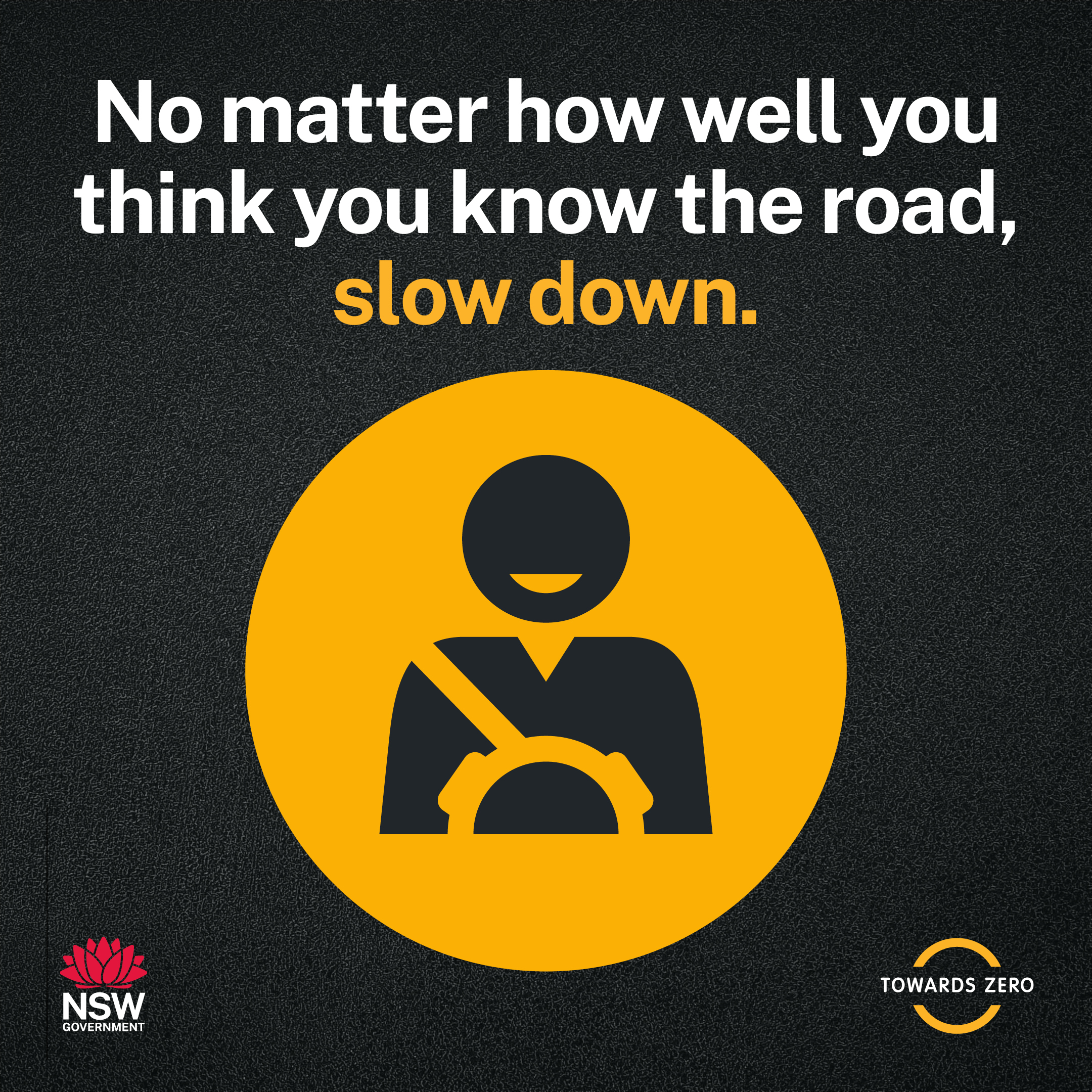
No matter how well you think you know the road, slow down 1x1
Social media copy:
Local legend? ‘Towards Zero Hero’? Total champ. No matter how well you know the road, stay within the speed limit. Model safe driving in your area and drive so that others survive.
Download
|

|

|
|
|
Curves and bends
Social media copy:
Did you know half of all fatalities on country roads happen on curves or bends? Please slow down and follow advisory speeds and signs when approaching curves, bends and crests.
Download
|
Why do crashes happen more on country roads?
Social media copy:
Regional NSW is home to a third of the population but is where two-thirds of all road deaths happen.
Generally higher speeds, more trees and embankments, and longer travelling distances, along with a higher median rate of older vehicles can all contribute to higher road trauma in regional areas.
To help keep safe when driving in regional NSW, stay within the speed limit, take regular breaks and stay alert, and choose the safest vehicle within your budget.
Download
|
|
Speeding
Speeding is the biggest cause of death on NSW roads. Speed increases your risk of a crash and the impact of a crash. Speeding contributes to over 40% of road deaths in NSW each year. Slow down, speed kills.
Average Speed Camera Light Vehicle Trial
A trial using average speed cameras to detect speeding in light vehicles is underway in NSW. The two trial areas are: Pacific Highway, between Kew and Lake Innes, in Port Macquarie, and Hume Highway, between Coolac and Gundagai. Average speed cameras use two cameras to measure the amount of time it takes a vehicle to travel between two points on a stretch of road. For more information, please visit: www.transport.nsw.gov.au/averagespeedcameras
Use our quizzes for your community engagements:
Speeding quiz promotional assets:

Download quiz promo poster (Activations)

Download quiz promo tile (Digital)